
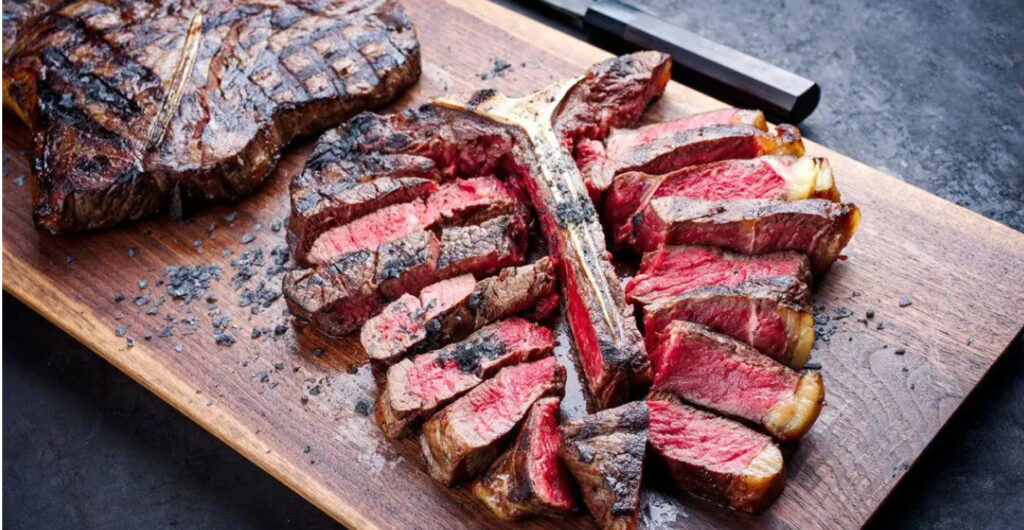
🥩 What is a real Florentine Steak?
When visitors think about Tuscan cuisine, one dish usually comes to mind before any other:
Bistecca alla Fiorentina
The famous Florentine steak is not simply a large piece of beef.
For many Florentines, it is a symbol of local culture, tradition and identity.
And surprisingly, many tourists visit Florence without ever tasting a real one.
📜 A tradition dating back centuries
The origins of the Florentine steak are often linked to Renaissance Florence.
According to local tradition, the name “bistecca” may have originated during celebrations organized by the Medici family.
Foreign visitors attending public festivities reportedly referred to the grilled meat as “beef steak”, a term that gradually evolved into the Italian word “bistecca”.
Whether the story is entirely true or not, the Florentine steak has become one of Tuscany’s most iconic dishes.
🐄 The importance of the meat
A real Bistecca alla Fiorentina is traditionally cut from:
Chianina cattle
one of Italy’s oldest and most prestigious cattle breeds.
Today, some restaurants also use other high-quality breeds.
However, traditionalists still consider Chianina the gold standard.
The steak must be:
- thick-cut;
- bone-in;
- large enough to be shared;
- cooked over very high heat.
🔥 Why cooking matters so much
This is where many visitors get surprised.
A true Florentine steak is traditionally served:
rare
Very rare.
The outside should have a beautiful crust, while the inside remains warm, tender and red.
For many locals, ordering a Florentine steak well done is almost considered a culinary crime.
🚫 The most common mistake tourists make
Many visitors order:
- well done;
- medium-well;
- with sauces;
- with excessive seasoning.
In reality, the Florentine steak is all about the quality of the meat itself.
Traditionally it is served with:
- a little salt;
- black pepper;
- extra virgin olive oil after cooking.
Nothing more.
⚖️ Size matters
Another surprise for many travelers is the size.
A real Florentine steak is not an individual portion.
Most steaks weigh:
- 1 kilogram;
- 1.2 kilograms;
- sometimes even more.
For this reason, locals usually share one steak between two or more people.
🍷 What should you drink with it?
The traditional answer is simple:
Tuscan red wine
Popular choices include:
- Chianti Classico;
- Brunello di Montalcino;
- other structured Tuscan reds.
The combination of grilled beef and Tuscan wine is one of the most authentic food experiences Florence has to offer.
🧠 Not every Florentine steak is the same
The word “Fiorentina” appears on menus all over Florence.
However, quality can vary considerably.
A good restaurant will usually:
- show the steak before cooking;
- explain the cut;
- indicate the weight;
- cook it over proper high heat.
The best experiences often come from restaurants that focus on the quality of the meat rather than attracting tourists with oversized menus and flashy signs.
🌆 More than just a meal
What makes the Florentine steak special is not only the food itself.
It is also:
- sharing a meal with friends;
- enjoying a long dinner;
- discovering Tuscan traditions;
- experiencing Florence beyond museums and monuments.
For many visitors, it becomes one of the most memorable moments of their trip.
❤️ Is it worth trying?
Absolutely.
Even travelers who are not usually passionate about meat often remember the Florentine steak as one of the highlights of their stay in Tuscany.
It is a dish deeply connected to the history, culture and identity of Florence.
And for that reason alone, it deserves a place on every food lover’s itinerary.
🛏️ Stay in Florence with us
Our guest houses offer a convenient base for exploring Florence, its food traditions and its historic neighborhoods.
Whether you are visiting for a weekend or a longer stay, Florence is a city best experienced slowly, one meal at a time.